Charlie, are you out of your mind? You think Im inviting you to live with me just for a few quid? Poor thing, thats all.
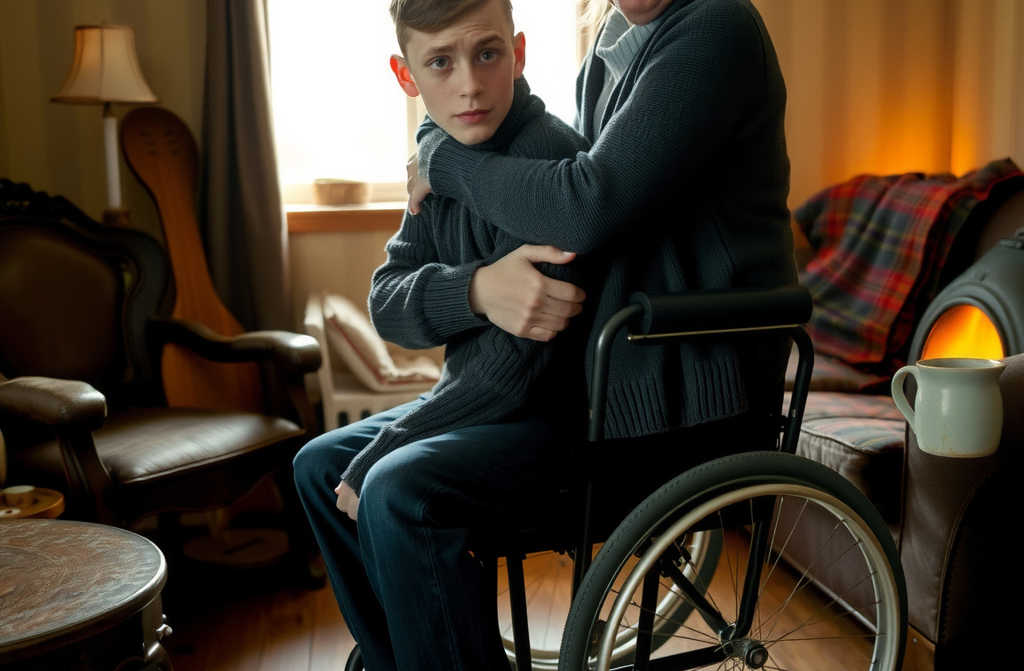
I was perched in my wheelchair, staring through the dustcaked panes at the street outside. My wards window opened onto the hospitals inner courtyard, a tidy little square with stalls and flowerbeds, but hardly anyone wandered there.
Winter had settled in, and the patients seldom ventured out for a stroll. Charlie lay alone in his room. A week earlier his neighbour, Tommy Turner, had been discharged, and ever since the silence had grown unbearably heavy for me.
Tommy was a sociable, cheerful chap, a storyteller who could spin a yarn like a seasoned actor. He was studying drama, third year at the local conservatoire. Boredom was simply impossible in his company. His mother visited daily, bringing fresh scones, fruit, and sweets, which Tommy always shared with Charlie.
When Tommy left, a certain homeliness vanished from the ward, and I felt lonelier than ever, as if Id become completely unnecessary.
My gloomy thoughts were interrupted by a nurse entering. I looked up and my mood soured further: the pleasant, youthful Lucy had been replaced by the perpetually sour, foreverdispleased Maggie Whitfield.
In the two months Id spent here, Id never seen Maggie smile or even crack a grin. Her voice matched the hard lines on her face: sharp, gruff, downright unpleasant.
Why are you standing about? Back to the bed! she snapped, brandishing a syringe already filled with medication.
I sighed in defeat, turned my chair obediently, and rolled to the bedside. Maggie deftly helped me into a horizontal position, then swiftly tipped me onto my stomach.
Strip off your trousers, she ordered. I complied, feeling nothing at all. Maggies injections were always skillful, and I silently thanked her each time.
Wonder how old she is, I thought, watching her focus on the faint vein in my gaunt wrist. Probably retired by now, pension barely enough, thats why shes so cross.
At last she slipped the fine needle into the pale blue vein, making me wince just a fraction.
All done. Did the doctor come today? she asked unexpectedly, already gathering her things.
No, not yet, I muttered, maybe later
Dont sit by the window the draught will dry you out like a cod piece, she warned, and left the room.
I wanted to snap back at her, but couldnt. Beneath her brusqueness and odd tenderness there was a flicker of genuine concern, however rough it seemed.
Im an orphan. My parents perished when I was four, a fire tearing through our cottage in the countryside. I was the sole survivor. A searing burn on my shoulder and wrist reminded me of that night: my mother, with the last of her strength, hurled me through a shattered window onto the snowladen ground, saving my life. She did it a minute before the roof collapsed, burying the rest of us.
That tragedy sent me to a childrens home. Relatives existed, but none rushed to take me in. From my mother I inherited a gentle, dreamy nature and bright green eyes; from my father, height, a lanky gait, and a knack for numbers. I remembered my parents only in fleeting movielike snippets: waving a bright flag at a village fête with my mum, feeling the summer breeze on my cheeks while perched on my dads shoulders.
I also recall a large ginger cat, called either Whiskers or Marmalade. Apart from those shards of memory, nothing remained even the family photo album had been consumed by the blaze.
No one visited me in the hospital; there was simply no one left. When I turned eighteen, the state allocated me a bright, spacious room in a university hall of residence on the fourth floor. Living alone suited me, though at times a wave of melancholy threatened to drown me in tears. Gradually I grew accustomed to solitude and even found some advantages in it.
Yet the orphanage years still haunted me: watching families with children on playgrounds, in supermarkets, on the streets, brought bitter, unsettling thoughts to mind.
After school I wanted to go to university, but I fell short on the required points, so I enrolled in a technical college instead. I liked the courses and the trade I was learning, but I never clicked with my classmates. Quiet and withdrawn, I offered them little interest, and I preferred books and scientific journals to the usual student revelry and video games. When we did talk, it was always about coursework.
Women, too, were a different story: my shyness never won any hearts, as there were always bolder, more chatty rivals. At eighteen and a half I still looked no older than sixteen. I had become something of the odd one out in my group, but it didnt quite bother me.
Two months ago, hurrying to a lecture, I slipped on an icy pavement and fell in a subway tunnel, breaking both legs. The fractures were nasty, healed slowly and painfully, but theyve improved over the last couple of weeks.
I hoped to be discharged soon, yet anxiety crept in: the building I lived in had no lift or ramps for someone with limited mobility. Sitting in a wheelchair for the foreseeable future seemed inevitable.
After lunch, Dr. Henry Lawson, the orthopaedic surgeon, entered my ward. He examined my legs, looked over the Xrays, and said:
Charlie, Ive got good news. Your fractures are finally knitting together as they should. In a few weeks youll be on crutches. Theres no point staying here much longer; youll be treated as an outpatient at the clinic. In about an hour theyll bring your discharge papers, and youll be free. Is anyone waiting for you?
I nodded silently.
Excellent. Ill call Maggie; shell help you pack your things. Take care, Charlie, and try not to end up back here.
Ill try.
The doctor winked and left. I began to contemplate my next steps when Maggie interrupted.
What are you doing sitting there? Youre being discharged, she said, handing me a backpack from under the bed. Pack up, dear. Nina Parker will be changing the bedding shortly.
I stuffed my modest belongings into the bag, feeling Maggies scrutinising gaze on me.
Why did you lie to the doctor? she asked, tilting her head slightly.
What do you mean? I replied, feigning confusion.
Dont play the fool, Charlie. I know no ones coming for you. How will you get home?
Ill manage somehow, I muttered.
You wont be walking for at least another halfmonth. How do you intend to live?
Ill sort it out; Im not a child.
Suddenly Maggie sat on the edge of the bed, looking straight into my eyes.
Charlie, it may not be my business, but with injuries like yours youll need help. You cant do it alone. Dont take it personally, Im only being honest.
Ill manage.
You wont. Ive been in nursing for over a year. Whats the point of arguing like a child? she snapped.
Im not asking why youre telling me this.
Its because youll be staying with me for a while. I live far out of town, but theres a spare room two steps up the porch. Once youre on your feet you can go back home. Im a widow, no children, just me.
I stared at her, stunned. Live with her? She was a stranger, and Id long since stopped hoping anyone would look after me.
Why are you so quiet? she demanded, frowning.
Its awkward, and I stammered.
Stop making a fuss, Charlie. Living in a house without a lift or a ramp in a wheelchair is uncomfortable, she said in her usual brusque tone. So, are you coming to my place?
I hesitated. On one hand, moving into a strangers home felt unsettling; on the other, I wasnt going to be walking any time soon, and Maggie didnt seem entirely foreign after all.
In the weeks before my discharge, shed dropped hints and little advice: Dont forget to close the window, its been chilly, Cheese has calcium, good for you, Keep your meds on schedule. Shed been the only one consistently looking out for me.
Im willing, I finally said, but I have no money. My grant wont arrive for a while.
Maggies eyes widened, then narrowed, and she snapped, Charlie, are you out of your mind? You think Im offering you a place for free? I feel sorry for you, thats all.
I just thought I began, then stopped, apologising for any offence.
She softened slightly, Im not offended. Lets get you to the ward where you can sit while I finish my shift. Itll be over soon, and then well go.
Maggie lived in a modest, tidy cottage with narrow windows. Inside were two snug rooms; one of them became mine.
The first days I was embarrassed, hardly leaving the room, trying not to bother the lady of the house with my requests. Noticing this, the elderly nurse said plainly, Stop being shy. Ask for anything you need; youre not a guest.
In truth, I liked it there: snowdrifts outside, the crackle of logs in the fireplace, the smell of homecooked stew all reminded me of my own lost home and a distant, happy childhood.
Days passed. I still had my wheelchair, then later crutches. It was time to return to the city.
After a routine visit to the clinic, I limped alongside Maggie, sharing my plans for the coming weeks:
I need to sit my exams, do my assessments. So much time lost, its a nightmare. I dont feel like taking any more courses.
Take them, Maggie urged, your technical college wont disappear. Start moving now, as the doctor said, reduce the load on your legs!
Over the past months wed grown close. I found myself reluctant to leave that cosy cottage and the endlessly kind woman whod become, for an orphan, a second mother. I still lacked the courage to admit it to her or even to myself.
The next morning, while gathering my things, I searched for my phone charger and froze: Maggie stood in the doorway, tears streaming down her face. I, driven by some unknown impulse, stepped forward and embraced her tightly.
Will you stay, Charlie? she whispered through her sobs, How will I manage without you?
And I stayed.
A few years later, Maggie took a place of honour at my wedding, seated beside the brides mother. A year after that, she cradled my newborn granddaughter in the maternity ward, naming her after herself.
If you enjoyed the tale, do subscribe for more. Leave your thoughts and a like below.