Sir, please take my little sister. Shes starving, a trembling voice cut through the clamor of the market street and froze Ian Bartlett in his tracks. He wasnt just hurryinghe was sprinting, as if an unseen foe chased him. The clock was ticking: millions of pounds hinged on a decision that had to be taken at todays board meeting. Since Rachel, his wife, had disappearedhis light, his anchorwork had become the only thing that gave his life meaning.
But that voice
Ian glanced over his shoulder.
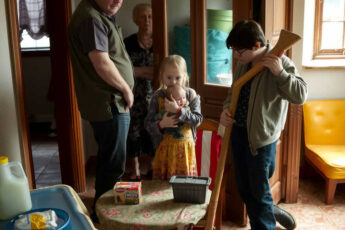
A child of about seven stood before him. Thin, ragged, eyes rimmed with tears. In his arms he clutched a tiny bundle from which a small face peered out. The girl, wrapped in a threadbare blanket, whimpered softly, while the boy pressed her close as if he were her sole shield against a cold, indifferent world.
Ian hesitated. He knew there was no time to waste, that he had to get back to the office. Yet something in the childs pleading please struck a deep chord in his soul.
Wheres your mother? he asked gently, sitting down beside them.
She promised shed come back but shes been gone two days now. Im waiting here, hoping shell appear, the boys voice trembled, as did his small hand.
His name was Jack. The girl was Emily. They were alone, with no note, no explanationonly the fragile hope a sevenyearold clings to like a drowning man to a straw.
Ian suggested buying food, calling the police, notifying social services. At the mention of the police, Jack flinched and whispered with a pained edge:
Please dont take us away. Theyll take Emily
In that instant Ian realized he could not simply walk away.
At the nearest café Jack devoured a sandwich greedily, while Ian carefully fed Emily a medicinal formula hed bought from a nearby chemist. Something long buried beneath his hardened exterior began to stir.
He dialed his assistant:
Cancel all meetingstoday and tomorrow.
A short while later officers Clarke and Patel arrived, asking the usual questions and following standard procedures. Jack squeezed Ians hand, his grip uneasy.
You wont hand us over to a care home, will you? he asked.
Ian heard the words he hadnt expected to say:
No, I wont. I promise.
The paperwork began. Social worker Margaret Hughes, an old friend and seasoned caseworker, stepped in. Thanks to her, a temporary guardianship was arranged swiftly.
Only until they locate the mother, Ian repeated to himself. Only temporarily.
He drove the children home. The car was silent as a tomb. Jack held his sister tightly, asking nothing, merely murmuring soothing words.
Ians flat welcomed them with spacious rooms, soft carpets, and large windows framing the whole of Manchester. For Jack it felt like a fairytalehe had never known such warmth or comfort.
Ian, however, felt out of his depth. He knew nothing about baby formula, nappies, or a toddlers routine. He tripped over changing mats, forgot feeding times, and mixed up bedtime cues.
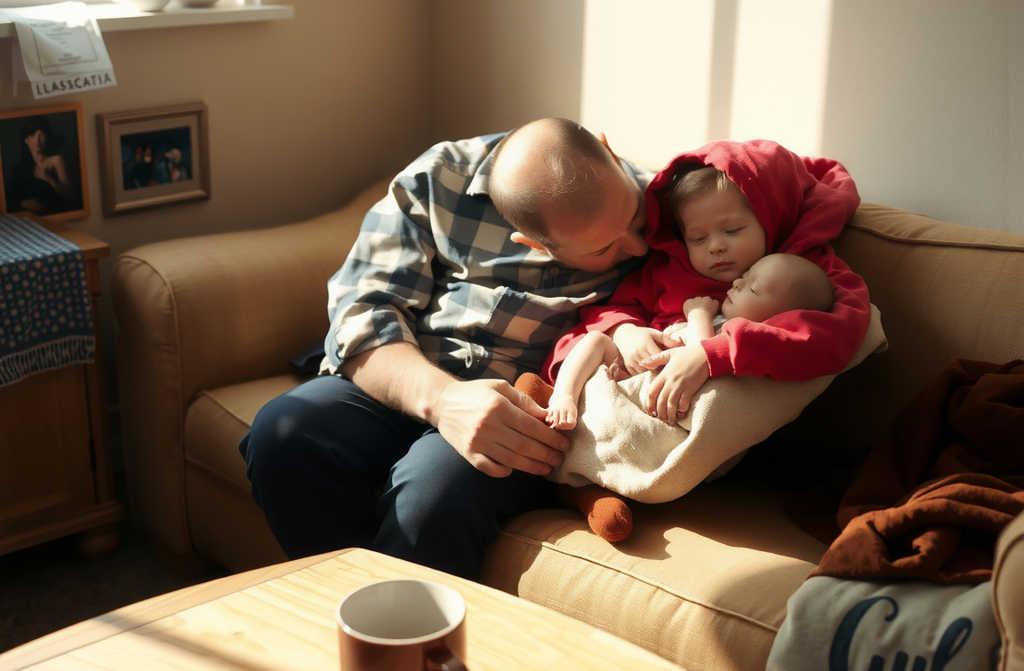
Yet Jack stayed close, quiet and watchful, as if he might disappear at any moment. He helpedrocking Emily gently, humming lullabies, tucking her in with a tenderness only a seasoned caregiver could muster.
One evening Emily could not settle. She whined, twisted in the cot, unable to find a comfortable spot. Jack slipped into the room, lifted her into his arms, and sang a soft lullaby. Within minutes the little girl was peacefully asleep.
You have a remarkable way of calming her, Ian said, warmth swelling in his chest.
Its something Ive learned, Jack replied matteroffactly, without complaint or resentment, simply as a fact of life.
A phone rang. Margarets voice came through.
Weve located their mother. Shes alive but currently in a rehabilitation centre for drug dependence. If she completes treatment and proves she can care for the children, theyll be returned to her. Otherwise the state will take custody or you could become their guardian.
Ian fell silent. Something tightened inside him.
You could formalise the guardianship, even adopt them, if you truly want to, Margaret continued.
He wasnt sure he was ready to be a father, but he knew he could not lose them.
That night Jack sat in the corner of the living room, sketching carefully with a pencil.
What will happen to us now? he asked, eyes never leaving the page. His voice carried fear, hurt, hope, and the dread of being abandoned again.
I dont know, Ian answered honestly, sitting beside him. But Ill do everything I can to keep you safe.
Jack fell quiet for a moment.
Will they take us away again? Take you, this house?
Ian wrapped his arms around the boy, holding him tightly without words. He wanted his embrace to say: you are no longer alone. Never again.
I will never hand you over, he whispered. I promise, forever.
In that instant Ian realised the children were no longer strangers; they had become part of his very self.
The next morning he called Margaret.
I want to become their official guardian, he said.
The process was arduous: background checks, interviews, home visits, endless questionnaires. Yet Ian persisted, driven by a purpose that had finally taken shapeJack and Emily.
When the temporary guardianship became permanent, Ian bought a house on the outskirts of Birmingham, with a garden, open fields, morning birdsong, and the earthy scent after rain.
Jack flourished. He laughed, built forts of cushions, read aloud, brought home drawings and proudly displayed them on the fridge. He lived freely, without fear.
One night, as Ian tucked Jack into bed, he brushed a blanket over the boys shoulders and gently ran his hand through the hair. Jack looked up and whispered:
Goodnight, Dad.
A warmth rose deep inside Ian, his eyes glistening.
Goodnight, son.
Spring brought the final adoption hearing. The judges signature formalised what Ians heart had already accepted.
Emilys first wordDaddy!proved more valuable than any corporate triumph.
Jack joined a local football team, made friends, and often returned home with a noisy, happy crowd. Ian learned to braid hair, cook breakfasts, listen, laugh, and feel alive again.
He had never planned to be a parent, never sought it out. Yet now he could not imagine his life without Jack and Emily.
It was hard. It was unexpected.
But it turned out to be the most beautiful thing that ever happened to him, reminding him that true purpose often arrives disguised as a simple plea for help, and that opening ones heart can transform a solitary life into a shared, thriving one.